This One Change Led to Their Biggest Year in 36 Years


 RSS Feed
 There’s a widespread belief that zero-interest payment plans are too expensive to the practice. But the reality is interest-free payment plans cost the practice almost exactly what a cash discount costs.
Marie Olesen, CEO, and Janelle Robinson, COO, of La Jolla Cosmetic Surgery Centre return to Practiceland to share their journey from treating payment plans as a last-resort conversation to leading with them.
To implement the shift, they started small and tested by leading with payment plans for a full quarter, then six months, and watched applications climb from 20 percent of consults to 50 to 60 percent. That shift resulted in the biggest year in the practice's 36-year history.
Questions answered by this episode
- What is a payment plan for plastic surgery?
- How do interest-free payment plans work for cosmetic surgery?
- Is it worth offering payment plans instead of discounts?
- Should a plastic surgery practice charge for consultations?
- What is a soft credit check for medical financing?
- How many hours a week does a plastic surgeon actually operate?
- How do you ask a patient how they plan to pay without sounding rude?
- Can payment plans increase the average size of a surgery case?
- What percentage of consults should include a financing application?
- Why do some practices treat payment plans as a last resort?
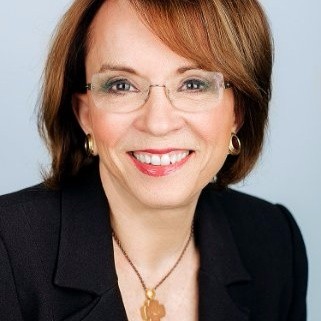
Marie Olesen
CEO, La Jolla Cosmetic Surgery Centre
Marie has spent her entire professional life helping good doctors take better care of their patients and helping patients find the good doctors. When Marie's husband, R. Merrel Olesen, MD, founded LJCSC in 1988, there was little understanding of the needs of cosmetic patients. To make sure their patients were happy, Marie began surveying LJCSC patients and has done so continuously for 31 years. A self-admitted data junkie, she loves exploring patient feedback for insights that can help LJCSC and other practices better serve their patients. She is known as an innovator in cosmetic patient care and communication. She is an author, speaks nationally and internationally, and serves on the Board of the Center for Services Leadership at Arizona State University.
Connect with Marie on LinkedIn
Learn more about La Jolla Cosmetic Surgery Centre
Janelle Robinson
COO, La Jolla Cosmetic Surgery Centre
As the Chief Operating Officer, Janelle keeps things running smoothly at La Jolla Cosmetic Surgery Centre. She's in charge of the day-to-day operations, from handling patient financing to making sure everything is in place for patients to receive top-notch care.
Connect with Janelle on LinkedIn
Learn more about La Jolla Cosmetic Surgery Centre
Eva Sheie
Founder & Podcast Producer, The Axis
Eva Sheie is a startup veteran, content strategist, podcast producer, and professional musician. She is the founder of The Axis, a podcast production agency devoted to meeting the needs of women confronting life-changing medical decisions. Previously as the Director of Practice Development at RealSelf, she built and scaled the RealSelf University customer education program, and hosted the RealSelf University Podcast. Today she is the host of Meet the Doctor, co-host of Less of You, and the executive producer of numerous titles on behalf of clients, including Practiceland.
Learn more about The Axis
More from Practiceland
Missed the episode Marie and Janelle mention on reviews?
Listen to Prevent Bad Reviews Before You Get Them.
And for more of Janelle's coordinator-level playbook on talking about money, check out The Words That Open Wallets and From Awkward to Cha-Ching: The Ultimate Guide to Talking About Money in Aesthetic Practices.
Practiceland is presented by PatientFi — the patient financing partner built for aesthetic practices. PatientFi gives your patients access to flexible payment plans and gives your team the tools to offer financing confidently, without the awkward money conversation.
Learn more at patientfi.com/aesthetics
SHE DID WHAT?
Got a wild customer service story or a sticky patient situation to share? If your tale makes it into our "She did what?" segment, we'll send a thank you gift you'll actually love. Promise, no cheap swag here. Send us a message or voicemail at practicelandpodcast.com.
SUBSCRIBE
Are you one of us? Subscribe for new episode notifications and more at practicelandpodcast.com. New episodes drop weekly on YouTube and everywhere you listen to podcasts.
Host: Eva Sheie
Producer: Eva Sheie @ The Axis
Assistant Producer: Mary Ellen Clarkson
Engineering: Chris Mann
Theme music: Full Time Job, Mindme
Cover Art: Dan Childs
Practiceland is a production of The Axis: theaxis.io
Janelle Robinson (00:00):
If people are being too selective about the pricing or the payment options and the schedule's not filling, then your staff isn't working and there's a huge cost for having staff turnover if you can't retain them. So it's really shortsighted at the end of the day.
Andrea (00:21):
Well, hi there. I am Andrea Watkins. And if you're listening to this while juggling three patient calls, checking in a couple patients, taking a payment, selling skincare and trying to catch your doctor in between procedures, you might be working in an aesthetic practice.
Blake (00:35):
And I'm Blake Lucas and this is PracticeLand. This is not your doctor's podcast.
Eva Sheie (00:41):
Welcome back to PracticeLand. I'm Eva Sheie and my guests are back with me again, Janelle Robinson and Marie Olesen from La Jolla Cosmetic Surgery Center in San Diego. And if you missed our episode on reviews, don't walk, run and go back and listen to that one because the way you think about reviews will change forever. And so I didn't want to lose my opportunity to talk to them about payment plans because they've been head on that too. And so we're going to do another quick conversation about that today. Welcome back to the podcast, Janelle and Marie.
Janelle Robinson (01:15):
Hello.
Eva Sheie (01:16):
Marie, you started doing payment plans with your patients before some of us could legally work. What year did you start doing payment plans?
Marie Olesen (01:25):
1990.
Eva Sheie (01:27):
And what brought that on?
Marie Olesen (01:28):
The Connie Chung breast implant crisis. And there was a huge break of faith between the consumer and plastic surgeons and patients didn't just stop breast augs. They basically stopped everything and many, many patients. And we had just built this big new office. We had a huge staff and we had no surgery. And so my husband said to me, "Nothing comes from nothing. Every day I don't work is a problem for all of us." So my husband wanted to keep all of our staff. We wanted to pay our bills. And so he said, "If we can get 50% down from the patients, we can wait for my half and we can take a payment plan." And so we started doing this and we actually had my mother form a company so that we didn't disclose it was us. And we operated and did literally millions of dollars of work that we would not have done.
(02:48):
And patients paid 95%. They paid and they were so thankful. So we just kept doing it over the years. And then once the financing companies came in, then we stopped doing it ourselves. But we know that it helped us and we knew that there was a segment of patients that wanted it. And we had early defined ourselves, if you say we're going to take a retail store and we're going to decide who our practice is going to be like, we said we're going to be Nordstrom, not Neiman Marcus. And so since Nordstrom serves everyone, then a Nordstrom model would say we can't divorce ourselves from how people are going to pay. Maybe Neiman Marcus you can, but at Nordstrom you have to figure it out. But we always did it sort of as the last resort.
Eva Sheie (03:55):
So the timing was you'd get all the way through a consultation, you'd ask them how are you going to pay? And they would say, I have no idea.
Marie Olesen (04:04):
Well, I think we knew before that, but because we have a free consult in an industry that doesn't, and so we had to know that they were a serious candidate. So Janelle developed a question actually, what's your payment strategy?
Janelle Robinson (04:21):
When I was a coordinator, I wanted, like Marie said, to make sure this was a qualified candidate coming in and that they wouldn't later say they didn't have means to pay. And so by saying, what was your payment strategy? It was a delicate way to say, how are you planning on paying? Instead of really saying it in such a way that might sound offensive. And the goal would always be even many years ago to still have them try to apply online ahead of time, but you also wanted to approach that very delicately. And so I always find using analogies in this industry are very helpful because people haven't often pursued cosmetic surgery before. And so I would say, you don't want to get here, get all excited and then find out that you don't get approved. And so it's kind of just like when you go shopping for a house, you typically get pre-approved and then you go and you look for a house.
(05:28):
And so same thing, I would just want to make sure that you come in and you can go through this process and you know you're ready and not make it about us and put it more on why they would want to do it. And so we've sort of done that approach for many, many years, but we've just sort of changed it more and more in terms of how soon we introduce financing instead of it being really sort of a backup plan.
Eva Sheie (06:02):
Well, you made it about their feelings. I love that so much because you told them how you wanted them to feel in the moment where they're making the decision and you reframed it for them. One of the most important things I learned about this particular moment when you're the coordinator, you're trying to fill the schedule, and especially if you're a new or a young coordinator, you might think the best thing you can do is fill up that schedule as fast as you can and that your job is done. But someone told me once that a surgeon, an average plastic surgeon only has 23 hours a week with which they can operate, which means that's the maximum amount of time they have to generate revenue, which gives everyone a job and keeps the lights on. And so those 23 hours have to be filled with the very best possible candidates. And I know both of you know this better than I do, but a lot of our audience maybe is hearing that number, that 23 hour number for the first time. Do you want to add anything to that?
Marie Olesen (07:07):
Well, we offer a free consult, so there is no money, no revenue coming from our consults. Therefore, we're taking this precious resource of limited physician time and we're applying it to the step that's necessary to get them to the OR where they make their money. And if we aren't respectful of who's put in there, we don't want looky loosing shoppers. The PCs need to have determined this is a serious patient, motivated for sound reasons. And so that vetting becomes extremely important when you're using a limited resource of physician time and you've got to fill those ORs because that's how everybody gets paid.
Eva Sheie (08:03):
This free consultation is pretty controversial today. It didn't used to be. It used to kind of be what everybody did and now it's very unusual. Do you feel any pressure to turn it around?
Janelle Robinson (08:17):
I think it depends on the market. San Diego market is less prevalent in the paid consults, but it's more of a norm in LA, Orange County. So it's really kind of what our competitors are doing too.
Marie Olesen (08:38):
If you went to buy a car, you went to buy a house, you don't pay to shop. And I think charging for consults says this is a revenue producing activity, and I don't think it is. The revenue producing activity is surgery. So now to the extent that you lose people because of a paid consult, I don't want to lose those people. And if you don't vet well, then you're going to have very low conversion rates, in which case you're going to say it's a waste of time and we should have charged. But we've proven that no, you can get a proper patient in that room for a free consult and get high conversion rates out of it. And I saw a statistic the other day that 65% of facelift patients don't schedule. And I said to Janelle, well, we've got 65% scheduling out of a free consult.
(09:39):
So it's a matter of creating an experience and understanding their buying process, how they're going to buy. They're going to buy by reputation with ratings and reviews, with photos. We have a huge activity to get photos on our website so people can know our work. And then you can't divorce yourself from how they're going to pay. And the other thing is they may say, "Well, I'm going to wait till December when I sell my house or when I get something out of my pension fund or whatever." They've got some reason why they're delaying. But if you offer 24 month no interest, they'll go, "Well, I'll just go now. I can get that money. Then I'll get that money later."
(10:34):
And so we want those ORs full as much as possible to generate the retention and referral out of our activities. And I think that saying that people who want a payment plan are somehow substandard is just simply not true. And we have patients all the time who say, "Well, I just did it. I just bought a car and it was 1% interest." Now, I could have gone into my savings and I could have gotten the money to buy the car, but I thought, wait a minute, I'm making much more than that in the market. They're going to let me buy this car for 1%? I bought the car. And it had a deadline date, like June 30th was the end of that offer. I bought the car before June 30th and I thought here I am, just like a patient at La Jolla Cosmetic. It's just a consumer thought process.
Eva Sheie (11:39):
And the car is really special too. And I'm grateful for the car because I know how much it's changing your life and the quality of your life. So it's more than just a car too.
Marie Olesen (11:50):
Right. So just so you know who are listening, I bought a self-driving car because I'm a terrible driver. And so now my car is driving me all over San Diego and it's absolutely wonderful.
Eva Sheie (12:03):
And does it usually go the way you want it to or do you disagree?
Marie Olesen (12:05):
Well, no, I was arguing with it the other night when I had people in the car with me and they said the highlight of the night was listening to me argue with Tesla about what route we were going. But anyhow.
Janelle Robinson (12:20):
Well, you're not just saving the other drivers on the road, you're saving your sanity because you don't have to try to figure out where to go. And that's stressful. It is. Or driving at night and all of that. So it's your quality of life.
Marie Olesen (12:34):
Yeah. So back to payment plans, we had been under the misimpression that many practices are that it costs more to have a payment plan than to give the patients a discount. And so in 2025 or 2024, we did a study and we took a whole year of quotes and we said, "What were the discounts we offered off list? Multiple procedure discounts, timeframe discounts, whatever, and what was the net percentage that that was of the total quote?" And then we said, "Okay, let's come over here to payment plans and to PatientFi and say, what are their fees for 24 months no interest?" And it turned out it was almost exactly the same cost to the practice. So once we figured that out, we went to our doctors and said, "Here's the data and we think that we should go into a test and let's take a few months, a quarter at least, and let's lead with payment plans and let's see what that does to accelerate patient decision making and increase utilization of our OR and build the individual practices that needed to be built." And so we did it for about three months and it was so promising.
(14:18):
We said, "Let's extend it for six months." And by six months, it was so 100% clear that this was accelerating decision making, increasing the average ticket because people come in pre-approved for 50,000 or something and they were thinking about having the tummy tuck and then they're suggested they have a breast lift too or something. And where they would've said no before, they go, "Oh, well, while I'm here, I'll just do that." And so we are literally right now having the biggest month in the history of our practice, biggest year in the history of our practice.
Eva Sheie (15:02):
In the history of the entire 36 years?
Marie Olesen (15:08):
Mm hmm. Yes. Yes.
Eva Sheie (15:11):
Janelle, Marie used to say that she would walk around the office and people would say, "What are you doing today, Marie?" And she would say, "Looking for 5%." Did you beat 5% with this change?
Janelle Robinson (15:24):
Oh, for sure. I mean, yeah. And just even the fact that we're including the application in the new patient forms, it's a formality. Here, fill this out as a part of the registration process. And then they get that pre-approval. And like Marie said, I mean, some of these pre-approvals are 50,000 and they just have in their brain, "Well, I've saved up this much, so this is all I can do now and I'd have to do another surgery later." And this enables them to do more. And our duration of surgery, our average surgical case has gone up. And the goal for us is to have 100% of our consults come with an application. That's obviously not realistic, but we've gotten close. We've gotten to 50 to 60% where when we started this, it might've only been 20% of our patients. So to be able to double the amount of people that come with those approvals and money to burn in their pocket is just leaps and bounds in terms of getting them to move forward.
Eva Sheie (16:44):
I've been able to replicate it. I know you have something to add, Marie. I've replicated this in a handful of other practices too, and not on the same scale, but by doing simple things like embedding the apply link right next to the cost of the procedure on the procedure page so that the question and the answer to the question go together, how much does it cost? It's this much, but your payment plan can be as low as. I remember being shocked that you could get a breast dog for under a hundred dollars a month in some places if you put it on a five-year plan. That's nothing. That's dinner.
Marie Olesen (17:21):
Right. These days it is.
Eva Sheie (17:24):
Yeah.
Marie Olesen (17:24):
Well, I sometimes wonder how surgeons think because when they're talking about their practices to their peers around the country, are you talking about the percent of people who pay in what way? Or are you talking about how big your overall practice is and whether it's growing and whether you're taking on associates and whether those associates are growing? And so to me, since that's what we're talking about, here's a tool that sort of has a bad rap in people's minds. Somehow it's professionally diminishing to help people figure out how to pay. It's never made any sense to me because I want to help them. If this is what you want to do this and you need a payment plan in order to do it now versus five years from now after you've saved the money, let's have a payment plan.
Eva Sheie (18:28):
In the old world, the application happened much later than it does now. Part of that was the hard inquiry. Part of that was just because you wouldn't get all the way to the end and then you wouldn't go through that before you'd made a decision. That original thinking was, I'm going to present the quote and even people used to do this. Do you still do this thing where you push three quotes across like this treatment, this treatment, this treatment? Are they still doing that? Yeah.
Janelle Robinson (19:03):
And a lot of times the application process years ago required you put an amount and they would not want to put more than what they. Because they feared if the procedure was only going to be 10,000 and they put 15 that it would harm their likelihood of being approved. And so now that's really, it's not based on the amount. It's just how much do you qualify for? And so they don't have to go through the whole consult and get a surgical quote to know what to put on there.
Eva Sheie (19:38):
I thought you were actually going to say then they would fear that the price would go up to 15,000 if they qualified for 15,000.
Janelle Robinson (19:47):
Well, yeah, I suppose in some cases people would be worried about that. But no, the soft inquiry is great because I remember hearing in the past, "Oh, I don't want to do an application because I'm in the middle of buying a house and I can't show that I've got this other inquiry on my record." And so I think that's definitely been a big positive.
Eva Sheie (20:13):
All right. Let's recap. Financing the old way, payment plans and the conversation. Give me a quick description of how we used to do it and then maybe you can take turns. Then someone tell me how we do it now. Marie, give me the old way and Janelle, give me the new way.
Marie Olesen (20:34):
Well, I can't tell you talking to the patient, so I can tell you organizationally. The old way was there were no prices on the website, but we solved that very early. In the mid '90s, we put prices on the website. The second thing we always had, or soon thereafter, had a ways to pay page that tell people you can pay with cash, with credit card, payment plans, mixtures. The coordinators had a little talk track about how people pay to say they pay in these mixed ways so somebody isn't embarrassed. And so I would say then Janelle, you talk about how we talked about it, how the PCs talked about it.
Janelle Robinson (21:26):
We just found that when we brought up patient financing probably in the early days, it was because they came to us, a patient and said, "I can't pay cash or credit card, and so what other options do you have?" And it was sort of this last resort. And now it's really like, "Why wouldn't you do this? We have interest-free, desirable plans. It's going to enable you to do this when you are able to do it, not when you are getting your bonus in December or closing on a house or selling a car. It enables you to do it when it works best for you and you can start enjoying this sooner and then pay it off. There's no interest that you're accruing." And so really we're taking the approach that we're assuming you would want to do this because then it makes it less intimidating and it makes the conversation really easy for the patient then because a lot of times they think that everyone that comes in here is the lifestyle of the rich and famous that they're all paying with cash and credit cards, and that's not the reality.
(22:47):
And we want them to feel comfortable talking through their payment strategy with us. And so we give them a quote and say, "Here's what your monthly payment scenarios would be for it. And then if you are looking to pay with cash or credit card, you can maybe benefit from some discounts from that path." But the quote they're given is assuming they are going to do a payment plan. And it really is planting that seed that we have this huge differentiator of interest-free plans and not just interest-free, but extended terms of 18 to 24 months, which is extremely desirable to people. And there's really not many places that you can have free money for two years.
Marie Olesen (23:38):
And get what you want. Enjoy the change that you want for your life.
Eva Sheie (23:44):
There is one more way to pay that. It has gone by the wayside. And I will tell you, my grandfather, when he retired, he was the president of a clinic in Wisconsin, but he started as the bill collector, and so he rode his bicycle around and collected payments from the patients and then delivered the payments to the doctors on his bicycle. And sometimes people would pay with chickens. You can't do that anymore.
Marie Olesen (24:13):
No, that's gone the way of the dodo bird or whatever they say. Well, another way maybe for people to think about this is we are in retail medicine, and therefore when you look at models for how to conduct your business, look at retail. And so they're high service, they make payment plans, they have specials. So just saying we're going to mirror that if you have a season where you're not as busy and you can offer discounts during that season, I don't see any problem with someone saying, "I just can't do it right now, but if it were a little bit less, I could do it." And us saying, "Well, sometimes we get in circumstances, someone has to cancel for medical reasons at the last minute, or it's a quieter time of the year, and knowing you want this, we will keep you in mind." And we go back and we find those people and we get them on the schedule. And if you look at the OR schedule and say, "It has to generate the money for this business and our families and so on," then unnecessarily unsold time has a cost.
(25:43):
And so I see people have these high prices and then not work 50% of the time. And I think, well, I guess you have a life that you can do that, but with 30 employees, we can't sit and say, "We're going to only use you every other day." It doesn't work that way.
Janelle Robinson (26:05):
Well, we've had that. We've had a lot of people that have applied to us over the years because they don't get full-time hours somewhere else. And so if that's the case, if people are being too selective about the pricing or the payment options and the schedule's not filling, then your staff isn't working and there's a huge cost for having staff turnover if you can't retain them. So it's really shortsighted at the end of the day.
Marie Olesen (26:35):
Yeah. Yeah.
Eva Sheie (26:36):
If you want to hear more of Janelle's amazing wisdom, especially for the front desk and for coordinators on talking about payment plans, we have several other episodes where she's gone into great detail on that, and I will link those in the show notes.
Janelle Robinson (26:52):
Great.
Eva Sheie (26:52):
And if you want to hear more from Marie, you can find us on our soon to be released podcast called Beyond the Stars, where we will be capturing all of her glorious wisdom from decades of problem solving and caring for patients in a way that a lot of us truly believe in and have put our entire careers behind. And so I think Janelle and I, I can speak for her when I say we're both proud to be part of that legacy of taking care of people in our own ways. Do either of you want to add anything before we head out for the day?
Marie Olesen (27:28):
There's a saying that I heard once, which is rigid rules lack the necessary human factor. And I think that really applies to thinking about payment plans.
Janelle Robinson (27:43):
Love that.
Marie Olesen (27:45):
There are people out there who want to have surgery and literally payment plans at this point are a pathway that is the same or less than the discounts most practices are giving anyhow. So you just have to change your thinking and say, "I'm going to go where their consumer is instead of sit here with a less than ideally busy schedule with my rigid rules."
Janelle Robinson (28:16):
I just am a big proponent of making people feel comfortable and educating them and giving them all the tools because. And I think the other thing is this gives them hope. And so when they know that there's multiple options, then they feel like this isn't a daunting process, which is already so intimidating and scary. And let's just remove the financial worry and focus on you finding the right surgeon. So it really does give them hope and accessibility. So it's a great tool for the staff. They love it because it just makes it easier for them to help someone through their journey.
Eva Sheie (29:04):
If we can stop worrying about money, we can go back to worrying about recovery.
Marie Olesen (29:10):
Right, right. Exactly.
Eva Sheie (29:14):
Thank you both so very much.
Marie Olesen (29:17):
Thank you.
Janelle Robinson (29:17):
Thank you.
Blake (29:20):
Got a wild customer service story or a sticky patient situation? Send us a message or voicemail. If your tale makes it into our "She did what?" segment, we'll send a thank you gift you'll actually love. Promise, no cheap swag here.
Andrea (29:32):
Are you one of us? Subscribe for new episode notifications and more at practicelandpodcast.com. New episodes drop weekly on YouTube and everywhere you can listen to podcasts.

COO at La Jolla Cosmetic Surgery Centre
As the Chief Operating Officer, Janelle keeps things running smoothly at La Jolla Cosmetic Surgery Centre. She's in charge of the day-to-day operations, from handling patient financing to making sure everything is in place for patients to receive top-notch care.
Marie has spent her entire professional life helping good doctors take better care of their patients and helping patients find the good doctors.
When Marie’s husband, R. Merrel Olesen, MD, founded LJCSC in 1988, there was little understanding of the needs of cosmetic patients. To make sure their patients were happy, Marie began surveying LJCSC patients and has done so continuously for 31 years. A self-admitted data junkie, she loves exploring patient feedback for insights that can help LJCSC and other practices better serve their patients.
She is known as an innovator in cosmetic patient care and communication. She is an author, speaks nationally and internationally, and serves on the Board of the Center for Services Leadership at Arizona State University.