Before You Start Using AI With Patients, Do This First


 RSS Feed
 To use AI in the practice in a way that actually helps your patients, you have to know where to start to prevent it from hurting the brand.
Monique Ramsey defined her practice’s "cosmetic surgery bestie" voice, and built Avery—an AI coordinator that answers some common patient questions and books consultations at 2am while everyone's asleep.
A year later: 67 hours of coordinator time saved, median response time down from 24 minutes to one, and two-thirds of leads captured after hours.
Hear exactly how she built it, the trials and errors she faced along the way, and the one thing you need to set up before AI can do anything for you.
Learn more about La Jolla Cosmetic Surgery Centre
GUEST
Monique Ramsey
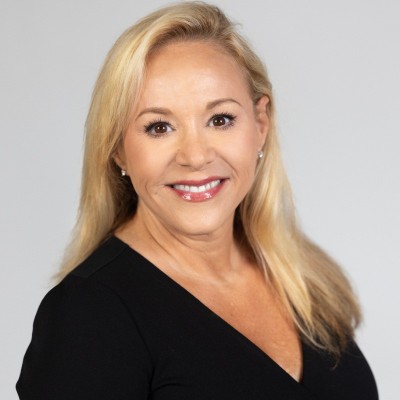
Chief Creative Officer at La Jolla Cosmetic Surgery Centre
As Chief Community Officer, Monique is entrusted with the LJCSC brand and ensures their messaging and communications are consistent, engaging, and accurate. Traditional and digital content creation, social media, graphic design, contests, events, podcasts, and promotions—Monique does it all with style and skill.
Connect with Monique on LinkedIn
Questions answered in the episode:
- What motivated you to start implementing AI in your practice?
- How do you train an AI agent to sound on-brand and give accurate answers?
- What real results has AI delivered for the practice?
- What happens when patients reach out after hours?
- How do you handle AI giving wrong or inappropriate answers?
- What are the risks of connecting AI to your patient database?
- What's the first baby step for a practice that hasn't implemented anything yet?
- How do you keep AI from "hallucinating" or making up answers?
- Should the most knowledgeable person in the practice be the one setting up the AI?
- How do you talk about pricing through AI without scaring patients off?
SHE DID WHAT?
Got a wild customer service story or a sticky patient situation to share? If your tale makes it into our "She did what?" segment, we'll send a thank you gift you'll actually love. Promise, no cheap swag here. Send us a message or voicemail at practicelandpodcast.com.
SUBSCRIBE
Are you one of us? Subscribe for new episode notifications and more at practicelandpodcast.com.
HOSTS
Blake Lucas, Senior Director of Customer Experience at PatientFi
Blake oversees a dedicated team responsible for managing patient and provider inquiries, troubleshooting technical issues, and handling any unexpected challenges that come their way. With a strong focus on delivering exceptional service, he ensures that both patients and providers receive the support they need for a seamless experience.
Learn more about PatientFi
Andrea Watkins, VP of Practice Growth at Studio III Marketing
Andrea Watkins, Vice President of Practice Growth at Studio 3, coaches plastic surgery and aesthetics teams on patient acquisition, lead management, and practice efficiency to drive measurable growth. Formerly COO of a multi-million-dollar practice that nearly tripled revenue under her leadership, she now partners with over 100 practices nationwide—helping them capture and analyze data, streamline consultations and booking, and align staff training with business goals. With a directive yet approachable, non-salesy style, Andrea turns data into action, empowering practices to boost conversions, maximize marketing, and elevate the patient experience in a competitive market.
Learn more about Studio III Marketing and LeadLoop CRM for plastic surgery practices and medical spas.
Co-hosts: Andrea Watkins & Blake Lucas
Producer: Eva Sheie @ The Axis
Assistant Producers: Mary Ellen Clarkson & Hannah Burkhart
Engineering: Cameron Laird
Theme music: Full Time Job, Mindme
Cover Art: Dan Childs
Practiceland is a production of The Axis: theaxis.io
Andrea (00:04):
Well, hi there. I am Andrea Watkins, and if you're listening to this while juggling three patient calls, checking in a couple patients, taking a payment, selling skincare, and trying to catch your doctor in between procedures, you might be working in an aesthetic practice.
Blake (00:18):
And I'm Blake Lucas, and this is PracticeLand. This is not your doctor's podcast. Welcome back to PracticeLand. We're so happy you're here. Today, we're talking all about AI. We're finally having a conversation here, diving into the details. With us today is Monique Ramsey, who's the chief creative officer of La Jolla Cosmetic Surgery Center. Welcome, Monique.
Monique (00:41):
Thank you.
Blake (00:42):
This is a topic that's very relevant for my life because this is the project that I'm leading up here at PatientFi as well. I think every owner, CEO, everyone is trying to figure out how to implement these things in a way that makes everyone more efficient. I think AI has become the buzzword, right? And so we're trying to figure out how can we utilize this new technology to make us better, but also to maintain an amazing experience for patients. So lot of challenges there. Let's start with, Monique, what motivated you to first get into this? Was it same thing, just owners coming after you saying, "Why didn't we have this yesterday?" Or how'd you get started?
Monique (01:24):
Actually, no. You know how all great stories start with self-preservation? So I'm in charge of the marketing. And so my team and I are driving leads and we have an omnichannel approach and things are coming in every day. And we have Podium and Podium, we actually started using the text messaging with our patients back in 2019, and we started with a different company and then switched to Podium. So we've had it for a long time and it's a great way to send out bulk messages because I don't know about you, but I'd much rather get a text than an email. My inbox is just, it's out of control. But I will follow up on a text, and that's so true. It's like 97% of people do. So in that environment of Podium, I would see if I sent a message out or I'd see people we would have everywhere, you can text us here.
(02:20):
And I would see messages sitting there and I would see these are leads. These are people with real questions. But meanwhile, the patient coordinators weren't really in there. They have a lead box from their contact forms and they have the phone ringing nonstop. Just so busy. So they've got all these other platforms and here's Podium. And I'm like, "But these people are just as good." So it was really to see these people just kind of sitting there and we're constantly then chasing and going to a Teams message board and, "Hey, did you get so- and-so and this lady?" And so the other thing I saw, so Podium has a phone's capability and we don't use it for our main phone lines, but we have one number so they can call or text. And we had missed in 2024, 270 calls, and that's not even a number that anybody answers because it wasn't ringing anywhere.
(03:10):
And they would leave a message and sometimes we'd get the message and sometimes we wouldn't and we're like, "What is going on? " So it was like those two things. Here's patients. Also, I would see in the Teams chat with the whole admin team, "So-and-so is on line three, da, da, da." And the poor people who are trying to get somebody to get the call like, "Hey, is anybody available all day long? Oh, she hung up. Oh, she hung up." And I'm like, "No, these are the leads." So it was really like, okay, how do we problem solve this? So it came from me seeing, I know we have capability here. How do I use that and help the coordinators and help us get those patients and make it a better experience for the patient too, because who wants to sit on hold for five minutes?
(03:57):
But they can now, if it gets called in there and they're in the loop, it'll say, "Press three, if you would like to continue, instead of holding, continue this by text." And then our AI can then take that conversation and help answer the questions. And then also the AI, her name is Avery. You can call her whatever you want, but her name is Avery and she is trained to answer all the questions and to get people to schedule a one-on-one phone conversation with one of our coordinators. And they can do this at two in the morning and-
Blake (04:36):
Yeah, right. When no one's available.
Monique (04:39):
Or if nobody's available during the day, so they're able to go self-serve and go, "Okay, the baby's down for the nap at 2:30, and so that's when I want to have my call." And then it's an appointment. And so it's been amazing. And we're just coming up on a year of using it. And we just recently redid our whole contact us section of our website just in the last few weeks to really call attention to, there's three ways to get started with us. You can call us, like right now, you click to call or you can fill out this form and we'll try to get back with you and our promise to them is 10 minutes or you can pick a time and here's a link and book it yourself. So the more that we're surfacing and making it more visible everywhere, I think that's when it's really taking off.
Blake (05:27):
Yeah. Patients just love the option to be able to schedule it however they want to do it and handle it however they want to do it.
Monique (05:33):
I mean, I would. I don't want to waste my time on hold and maybe-
Blake (05:37):
Yeah. If I could just text something and then it gives me a link and I can schedule it myself. I'm much more driven that way, I think. I don't know. But to focus back a little bit on the AI side of it too, I think something that's daunting is looking at AI and how do I make sure it answers things correctly? How do I make sure it provides the information that I want it to provide in a way that I want it done so it sounds like on brand, but also that it's giving accurate information and not something that just is way out of left field, right? So maybe tell me about how you got that process going and what did that look like for you?
Monique (06:11):
So how that ... I don't know if I did it right or not, but here's what I did. You're like, well, I'm going to tell the world, but they might go, "What was wrong with you? " So I sat there for two weeks kind of, not quite, and I'm sure there's an easier way to do this, but I didn't want to involve the whole web team and everything. I was like, I'm going to go to every single procedure page on our website because I know that information is vetted by a whole bunch of people and I copied and put it in a Word doc in every single procedure. So then I had all the information on every single procedure that we do. Then I went into Claude, and I love Claude. Everybody uses something different. I've used different things over the years. I think it's best for writing. It used to be called Bard, which is like Shakespeare, Bard. They called in the Bard. So for me, that is where I've been able to give it a voice. And so I've defined that voice for, and I call it your LJCSC bestie. I want them to connect.
(07:23):
I want the AI to connect in a way that's like you're talking to a girlfriend. And so I've given it that information. And so that is the voice I want it to use. Then I brought in and I'd say, "Okay, here is this procedure and here's what I want you to do and here's what I need." And so I actually have, I can share the prompt ... Now, I think the screen I want to get you to is going to be at the end, but I'll walk you through a couple things first just because this is going to make me. So here's Avery and my stock model.
Blake (08:00):
Wonderful.
Monique (08:01):
All time stats, and it's just been a year that we're coming up on exactly a year, so this is good timing. We've had 282 leads qualified by the AI, by Avery, not including phone calls, just the texting messages. So she's had 2003 and that's 66 hours, almost 67 hours of time saved. Yeah, for coordinators. And our med spa is separate now. And so we were getting a lot of text messages because it used to be all combined in the same number. And I want to reschedule my Botox with so- and-so. It's like, "Oh, you got to talk to so- and-so." So Avery takes care of all of that, all those things that people ask over and over. So last year we had nine months of Avery, and so she qualified 150 leads and a hundred of them happened after hours. And we really were thinking, how do we capture after 6:00 PM?
(08:52):
I mean, our phones are on from 7:30 AM to 6:00 PM, no lunch, no break, nothing, Monday through Friday. And still, we knew we were missing a lot of leads. So 67% were after hours and it was 1300 messages. Now we're not even through the third month of this year, we have look how many leads, almost the same amount in that-
Blake (09:17):
Over the last nine months, in the last three months.
Monique (09:20):
Three months, and only 27% are during business hours. So people's behaviors changing slightly, or we're picking up more. And so the sample size is different and we're getting different input. But it's already 20 hours saved. So that time that I invested getting Avery all the information from our website and answering a whole bunch of questions, there's a bunch of FAQs that Podium prompts you with. And Podium is really set up kind of for med spas, which we don't ... Our med spa is completely separate. So it was like, okay, everything they're talking about Botox, I don't want to talk about Botox. So I had to put in a lot of information, but- About procedures. Okay. So if you look at, here was what I was seeing and what prompted me to solve the problem is the 270 missed calls in 2024, which like I said, we didn't even have it hooked up to the phone. Then last year it got 488 and those 217, it was that first three months because we hadn't started it yet, but it'll tell you where are those coming from, how many were abandoned calls, how many ... And what it'll do is if the person hangs up, it'll send them a text message saying, "We're so sorry." I started to notice that. Click here. And it's so nice. Or if they're on hold and they want to switch to text, you can see the pink, the 49 people.
Blake (10:46):
Yeah. Well, because there's so many times that text feature after you try to make a call, because I feel like in my life, I have two twin boys, and so there's always something going on. I go to make a really important call and then all of a sudden all hell breaks loose somewhere. Somebody jumped off something and body slammed all the other. So then it's like, oh, and so I got to hang up really quick. And to get that text message, how convenient it would be just to be able to respond back and be like, "Yeah, thank you so much. Yeah, I really need to schedule this appointment or whatever it is and finally get ahold of somebody and not sit on hold again for however long it might take."
Monique (11:18):
Yeah. And then the year before, before we started it, our median first response was 24 minutes and some of them were way longer. That's the median. Look at this, this is like a hundred minutes over here. It was bad. And now it's one. So we solved that problem. So the new initiatives combined, having Avery, having that AI agent, which is, you'll hear that everywhere now, AI agents. And now they're even having AI like live calling, which is just happening as of last week that Podium has added live calling. They could actually talk to an AI agent, which I don't know how I feel about that yet, but we're on- It's always a little scary. So far, we're doing really well. And patients understand when Avery makes some dumb, she comes up with something really that doesn't make sense or says the wrong answer, they know it's ... We introduce her as an AI agent and we're here to help you, I'm AI coordinator here to help you get to what you need. And so they know and then we jump in. We're like, "Oh, sorry. Sorry, Michelle. We've got..."
Blake (12:26):
Well, and I loved going back to how you talked about your approach to it too, not forcing the patient into it, giving them the opportunity to select that as an option, there is a good portion of your target audience that's going to be okay with talking to an AI. And so giving them that option to opt into that. And then once they're in that experience, that person I think already has a bit of patience when they get into that.
Monique (12:52):
I mean, I've been working with La Jolla Cosmetic for almost 35 years at the end of this year. Oh my gosh, congratulations. That's amazing. So I've kind of gotten the voice down. I kind of know what it is. It's my voice. So that's really helpful. I think whoever you have set up your ... If you decide to do this, and I really do recommend, because patients are okay with it. They understand it. We're not saying you can never talk to an agent or a coordinator. We're trying to help them get further along and not be frustrated by the experience, but having that person there to help them through and get the voice right, I think is so important that they are going to have ... It still feels like La Jolla Cosmetic, and that's because I was the one setting it up. And you might think, okay, why are we taking the person who's probably paid the most on the marketing team to set up this?
(13:52):
But it takes so much knowledge. Every single procedure, all the price ranges, all the FAQs about every procedure. I mean, there's a ton of hundreds and hundreds of questions in there for Avery to get the information from. And so I'll show you what I did. So here's what I told Claude, and the voice is already in there, like, use your cosmetic surgery bestie voice. Okay. So I want to create an FAQ table to load into Podium for our AI patient coordinator, Avery, to use to answer the chats that come into our website, create FAQs based on the text from our website. And then I would attach the Word document of the stuff I pulled off the web. Please, one, extract the key information, two, identify common questions patients might ask, formulate clear, concise answers, organize everything in a structured FAQ format suitable for Podium because Podium was asking for FAQs.
(14:54):
So how much is rhinoplasty? How long will I be bruised? Every question you could think about for every procedure, it's a lot of text. And I also said, ensure Avery provides consistent answers that align with our website's information and our practices messaging, provide both a CSV file and a markdown file for each procedure we do so I can easily import into Podium and then create the FAQs with the cosmetic surgery bestie voice. So I'm your best friend. I'm helping you through this, capturing a vibrant, supportive energy. So you guys can decide for your practice, is it more formal? Is it more technical? I don't know. To me, I like to connect. I feel like connecting with patients, making them feel at home, making them feel comfortable. And so I don't want Avery getting in the way of that. I want Avery to be that for all of us when we're sleeping.
(15:53):
So that was the prompts I gave. And then here's ... So then I gave it, I said, because I had already asked for rhinoplasty at the beginning, I said, "Here's an example you made for me. So here was rhinoplasty." And some of these got a little cheesy. I was like, once it dropped it in, then I was taking stuff out because I was like, "Okay." Yeah, you start to get surgical with that. That feels a little weird, but that's okay. That's what you should do. So imagine having a magic wand that can transform da, da, da. Am I a good candidate? Let's find out. And so some of this was a little bit much. So I did pull stuff back out, but you can always take stuff out and make it sound like your voice- And tweak it and refine it. But having this get plopped in right away to have what are the non-surgical things on the day of surgery, what to expect?
(16:45):
What's your recovery roadmap? How much about is it going to cost you? And because we're partners with PatientFi, we don't talk in, it's going to be $35,000. We talk in, it will be starting at 258 a month or whatever that number is. We have options to fit every budget. Financing is with like 3,000 down, you could be paying 250 a month. And so-
Blake (17:11):
Keeping it friendly and open and not scaring people away from seeing a large price tag. Absolutely.
Monique (17:16):
Exactly. And because it's just overwhelming. It's too much. So this was an example that I gave it, and then I just did every single procedure. And so it was so good to have all this information from where I'm like, I don't have to reinvent the wheel.
Blake (17:36):
The experience that you've had is very similar to, I think, what we've done here at PatientFi because we're doing a lot of those same things we saw. Obviously there's a significant opportunity in the customer experience or customer support side of the business. It's probably the most applicable technology. It's the thing that you can apply very quickly and very successfully. There is some heavy lifting at the beginning, like you said. So we spent a good amount of time doing the exact same thing that you're doing is building out kind of a knowledge base or a help center and then having the AI ingest that and then test it, ask it a thousand questions to see what it would come up with and where it got things wrong or where it struggled and then realized maybe the format that we were creating wasn't the best. So we were doing a lot of long form answers for our FAQs and we started to realize short form answers were better.
(18:28):
It could spit out a response much quicker and then elaborate on that much better and use multiple FAQ questions together to answer one single question, which was amazing. And so it just got really, really efficient. And now 60% of our live chats are now handled entirely by an AI agent and doesn't need a human being to answer. And same kind of idea here, we have it just hooked up to a knowledge base. We're not having it answer any detailed or let's say individual information about accounts and balances and things like that. We still have that go to a human agent to handle that experience. And the fact that it can still handle 60% of what's coming in was unbelievable for us. Touching on, we did launch a voice agent and that was very scary. Same thing because I come from a place where experience and quality is much more important to me than quantity.
(19:24):
So we don't have like set goals on how many phone calls everybody needs to answer or like average time to, or talk times and things like that. We monitor it, but we don't like set KPI goals to that. I more care about like, are they going to recommend you to someone else? Are they going to give us a great review or whatever it may be? So I was very concerned about a voice agent. And through that experience, anyone that's looking to do that, you still need to do this exact same work. So like what you've set, Monique, does that groundwork that you've already done will automatically translate into voice because the voice essentially uses the same engines that like a chatbot might use or like an AI agent on chat. It's going to take that same information that you've built and then there's just a layer that takes what's, it translates that to text as an answer and then there's a voice layer that's just going to take whatever it says in text and then translate that into a voice and hopefully it's very realistic or very human sounding.
(20:22):
And then that's where it starts to get really complex because certain tools like the one that we're using is very detailed. You can start to tweak and analyze and change the inflections and the amount of empathy, like how quickly it's going to respond, that natural conversation where you pause and let someone answer, you can tweak how long that is down to like the second or millisecond. So that gets a little crazy and how aggressive it is in responding. So it's wild, all the things that you can do with this stuff, but we're already seeing amazing return on investment with that with about 40 to 50% of phone conversations being able to be handled by that, which is incredible. And we haven't seen a drop in customer satisfaction. So we're really, really excited to see that. We get very busy too, and our goal is to never miss a call, like no voicemails during business hours or any of those things.
(21:19):
And then now, of course, we have this voice agent that can answer all these things after business hours. So it is possible out there. So if anyone's considering it.
Monique (21:30):
And I know the thing I was forgetting earlier is that when I was watching the video about their voice, because Podium now has these voice agents and I just got a thing last week about it. So I was watching and it can take all the information that is in what the patient has done. So if you had it cooked up to your CRM, it's going to personalize it for them, which is pretty cool. And I think people are going to expect it. It's like, luckily in a way, we as consumers are seeing voice agents, AI agents, we're seeing this everywhere. So the banks and the hospitals, and great, because they're bathing the way to make it more normal for our patients. It's more normal. They're used to it. It doesn't feel so foreign.
Blake (22:20):
I think that's been the greatest challenge for us on implementing the voice side of it is consumer adoption of it, like being okay with talking to it because there's still a significant portion of people that when they get to that option to say, "Do you want to remain on hold or would you like to talk to our AI voice agent that can handle 80% of what you probably need?" We still see a significant portion saying, "No, no, no, I'm going to wait." So I think there's a couple of things that probably drive that. It's like past experiences working with a bot and just getting frustrated and being like, "You don't understand anything I'm saying," which this technology is, there is a major distinction. It's important to know that what AI and what those old phone bots were are not the same thing. It's a very, very different experience.
(23:06):
And so trying to help adopt or get people to adopt, and there's different techniques. We've tried to implement certain things like, "Hey, I can absolutely get you to an agent right away. Can I just ask what it is, just generic, what it is that you're calling about so I can make sure I get you to the right person so you don't have to wait any longer." And then typically it'll be like, "Yeah, I just had a question about how do I start my application?" And then it can answer that and then say, "Yeah, absolutely. Here's all the information about applying with us. Do you still need a human?" And then give them that same option and be like, "Yeah, I'd still like to talk to somebody or no, actually that answered my question." And then they can hang up.
Monique (23:42):
And I think that's really nice for the people who just want the down and out, get the answer, get out, you move to the next thing. And other people do want to have that more personalized experience. And I think for PatientFi, I think it's great because people do this stuff in the middle of the night. I mean, I'm a night owl.
Blake (24:01):
It's crazy how many calls you get at 1:00 AM. You're like, "What are you doing up?"
Monique (24:03):
And so having something there for that patient to be able to go to the next step is huge. And that's really what it was like if we're thinking about all the places that we might miss a patient where they give up and they go somewhere else, I don't want to see those patients just falling through the cracks. And so it was like how to seal all the cracks so that we're not missing. And hopefully, and over time, I think Podium's done a beautiful job of upgrading the software. So when we started, it was like version 1.0. Now version 2.0, when we give it feedback, we can actually see the feedback loop like, "Oh, I'm supposed to do this. And then did it get resolved?" And it'll tell you if it got resolved. And you can say, "Is that resolved correctly or not correctly?" And you just give a thumbs up, thumbs down.
(24:54):
And I'm really amazed at ... It was a little bumpy in the first few months, but Brittany, who's our project manager and she's head of customer experience, she and I together did it and we were just like, "We're going to make this succeed if it kills us." Because we knew, we knew it was going to be good. It was just hard to get there. And I think having that person in your practice who has enough knowledge about the practice and about the procedures is going to be the key so that it's not like just some pat, dry answer and that there's nuance. We have six surgeons, so there's a lot of nuance. It's not just Dr. Brown, Dr. Brown, Dr. Brown.
Blake (25:35):
Absolutely. Let's change gears just a little bit. I think I'd imagine most of our listeners are thinking about AI or know that they want to implement something like this. Getting started can be tricky or scary. Thinking about having those meetings with these different AI companies that are going to try to sell you hard on what they can do, were there fears that you had coming into it?
Monique (25:59):
I do think that they do come in, the sales team and they'll be like, "Yeah, it does this, this, and this and this. " And you're like, "Wow." And then you get in there and you're like, "Do I have helped as though I have a support?" We had a really good support person. The disconnect for us was that the engineering team, when we would give feedback or we'd ask a question, it would go to this team that we could never really talk with. And there was this big lag. And now that seems to be solved within their software so you can almost self-serve some of the-
Blake (26:32):
Yeah. It's not going into a black hole and you don't know where it's going.
Monique (26:36):
Yeah. So I mean, it still was a heavy lift, but it was like, we're going to do this because I don't want to see if we're spending that marketing budget on driving these leads and people prefer to text, then why are we ... And nobody's getting to them and they're busy. I know the coordinators, it's not like they're sitting around fixing their lipstick. They're really busy. We have six doctors. We're a busy practice and the phones never stop ringing and there's always something. So it was like, okay, how do I ... Back to the self-preservation, how do I make sure that those patients, because I care about those patients, we have a podcast, we have all these different ways that we reach out and connect to people. And when they're ready to make that decision, I don't want to lose them.
Blake (27:21):
Does it ever get into too the conversation of like, Oh yeah, our AI can replace a lot of the doctor's consultation and save your doctor a ton of time and get into that.
Monique (27:30):
Well, that would be really scary. I mean, medical legally, right? I mean, I would hope, and this is why I think you need to have somebody in your practice or maybe out of your practice. Maybe it's the doctor's wife who works from home a couple days a week or manages the practice from home, but having a dedicated person who's smart enough to know about all the procedures and then be thinking about how am I going to do this in a medical legal way? For example, so 18-year-olds. So we had a girl who came in to the chat and was asking about a BBL and she's 15 and AI is taking this chat at first and it gave a price range. And we're like, no. It's one thing we don't know how old ... I mean, there was in the conversation, I don't remember all the details, but we figured out their age, but right now we have parameters that you have to ask how old they are and before you give certain information.
(28:34):
And anybody under that, they need to talk to a patient coordinator that's going to hear, use this link, set up a time for a call. You need a parent or guardian because how inappropriate is that to give Avery- Avery did what? She told the patient who's 15 how much it costs for a BBL and a breast aug like, oh my God.
Blake (28:58):
Yeah, absolutely. Yeah. So it's important to put in those parameters and those safety nets to protect the practice and someone-
Monique (29:06):
It's knowing what information do we feel comfortable giving and Avery will say, and there's an escalation, if it's a money thing, it goes to here. If the person's really mad, where does it go? And it escalates to different people's emails. And so we see an escalation like Avery's stuck basically and she can't help this patient anymore. And she tells the patient like, "Let me get you somebody who can help." And then she comes back and emails us and we take care of it from there.
Blake (29:39):
I absolutely agree. It takes someone with a certain level of business knowledge and business acumen to understand maybe a bit bigger of a picture of how to make sure to protect the business. Also too, you don't want it sharing out private information of another patient if you think of the ways that you could ask it and forget to give you information, you Yeah. I haven't even thought of that.
Monique (30:03):
Luckily, since our CRM's not connected, maybe it would never do that. But it is scary and you do want-
Blake (30:09):
But that can't happen if you connect those things. If you connect your EMR and you connect, there's verification steps it's got to take and make sure that it passes before. Oh yeah, let me just give you the appointment history and the next upcoming thing or whatever it is.
Monique (30:23):
Right.
Blake (30:24):
Yeah. So you got to make sure you have someone that knows what they're doing setting this up.
Monique (30:28):
Also, I was thinking when we were setting it up, I thought, God, what if you gave it to somebody who is on their way out the door and then you have no idea what they did? Like you set up Avery, but now she's not here anymore. What's in there? And so that's where I was talking with Podium like, look, practices are going to need to get this information out for a lot of reasons. And we need to know what is the knowledge base? Because once you put it in, then you can't really see it. I know what I have from the Word documents, but over time you tweak and you change and a coordinator might say, "Oh, hey, Avery said this and that's not right." Especially on complex breast procedures where capsulectomy with an implant or removal and a lift and a this and a that, it starts to get hard.
Blake (31:17):
Yeah, no, it does. And AI will do these things. It will start to hallucinate, as they say, is the term of it. And it'll make up an answer that I'll try to answer for you. It's on a set path. It's very determined to answer whatever it's being asked and provide an answer. And just like a human being, if you ever have worked with staff where they're like, they just want to provide an answer and sound knowledgeable as opposed to saying, "Well, that's a great question. I don't know the answer. Let me go find out. " Which is always safer than just trying to provide an answer. So AI will be that and it'll try to answer. So you got to be careful and make sure you're managing that knowledge base and those FAQs very closely. Yeah.
Monique (31:58):
And it is one of those things that you do on a daily basis. Stuff will come in there and will be able to tweak. And when I see a really good answer, I was like, "Whoa." I don't remember what it was last week. I was like, "Wow, that's really impressive." And I gave it a thumbs up because I was like, "I didn't even know it would think of all those things." And it did. And I wish I had the example. I don't, but because now the coordinators are in there every day. I'm like, "You guys, you need to be in there every day. Open it up." It's like you wouldn't leave a phone ringing and ringing and not pick it up. Podium's the same way. And so since they're in it more, I'm not in it as much. And so I'm not seeing that. But every time I do go in, I'm like, "Ooh, this is really working." It's fulfilling to know that then the coordinators aren't wasting their time on silly questions.
(32:49):
For example, "Oh, I need to reschedule my Botox with Brittany." What? We don't need any of our team doing that. Avery giving ... And that's a ton of questions are about price and about something about an appointment, and especially with the med spa, just because we've had the same phone number since 2018, 2019. So we used to have all of the patients come in through Podium and now it's just the surgical patients. So there is a percentage of stuff that's just like we don't- Yeah, we can have the AI handle that. AI do that so our patient coordinators are using their time to book surgery.
Blake (33:32):
Well, and I think we've all been on those phone calls where it's like that patient that just loves to talk.
Monique (33:35):
Oh yes.
Blake (33:37):
You know what I mean? And we know, I just need to get what day works for you. I just need to get you on the calendar. And I've got 10 other things sitting here. I can see the phone lines lighting up, if you will. And there's so much happening. And they're just like, "Yeah, and then my sister, she came in from out of town." And you're like, "Oh my gosh." And so you're trying to be nice, trying to be polite, and that turns into a 10, 20 minute conversation. You're like, oh. And the experience then for everybody else that's on hold or trying to get ahold of a person, you lose that. So this is that great opportunity to take that person that's just going to take you on a ride to get them through and get them what they need and move on to the next and be able to handle maybe the more complex situation or maybe calm down an angry patient, those more difficult situations where that needs my attention, these other things, this low hanging fruit, what an easy way to create efficiency.
Monique (34:29):
Well, and having that patient feel that they're being taken care of, even if it isn't a human yet, but you're trying. And that's competitive advantage. Us being able to answer the phone, so to speak, in the middle of the night and answer these questions in the middle of the night right when that patient is interested, that is everything. And I think it will give competitive advantage and the patients are seeing it everywhere. It's not like you're going to be so weird and you're so techie and not personal. You can make it personal.
Blake (35:05):
Keep it still human. Yeah. Monique, I think when I'm thinking about a practice that hasn't implemented any of these types of tools yet, it can be just overwhelming for coordinators or whoever's in charge of bringing these things on. If we were going to really roll this back, slow it down and talk about the baby steps to implement, what would you recommend?
Monique (35:27):
I would say baby step number one is having that online booking calendar. And so we used Calendly and Calendly has probably very robust plans. We just have the baby plan with one little link and I can have different appointment types. Yeah, but you have to be able to have that for people to be able to make an appointment with your coordinator. So you got to set that up first so that when you move to having that AI agent, the AI agent has a way to point them to at 11 o'clock at night to say, "Hey, yeah, this would be perfect. You speak with our patient coordinator, here's a link. You can set up a time that works for you. " So you've got to have that link to do that. And it wasn't too hard. And Calendly, it was what we use because it integrates with PatientFi, PatientFi.
(36:24):
I'm looking at your logo on the screen and I'm like, "Oh, PatientFi." It has an integration with Podium so that when the patient makes an appointment, you tell it what you want it to do. It'll send an email to them, it sends an auto text, it sends a reminder, and all of that is linked together, which I think is great. So there's a little ecosystem that works together. And so that I think is the first thing is having a way for patients in the middle of the night or when everything's just too busy, that they have a way to go make that online appointment for a one-on-one. And then you need your patient coordinators to be watching for when these appointments come through. And we came up with an address. It's BookMe@LJCSC. So BookMe is only Calendly, and then they add that email into Outlook so they can see the BookMe appointments that are coming up and it gives a reminder.
(37:27):
So that's really important because if nobody's looking and the patient's like, "Hey, it's 2:30. Where are you? " So that's the other thing is having the infrastructure loops and double checking and making sure that those don't slip through the cracks because that's that back to that and you never get a second chance to make a first impression. And then I think the other thing about Podium, you can try it. I think you get to try it for 60 days for free or something. And don't quote me, but I have a link. So there's a $500 off if you want to try it. And then so you can try it for-
Blake (38:10):
We've talked about referral codes on this platform before. But here we go.
Monique (38:13):
And you can try it. And if it works for you great, if it doesn't, it doesn't. But I think, and I feel good about recommending them because even nothing's perfect, but I do feel like they have their arms around things very well and they keep innovating. And just like we started with Avery 1.0, now we've got Avery 2.0 and everything. I went in there the other day on a question and I was like, wait, where did this whole section come from? There's like a whole bunch of stuff that wasn't there when I filled it out back in March of last year. So they keep adding more things, which I think is important because there's a lot of little itty bitty AI companies out there. They're a little sketchy.
Blake (38:56):
Yeah, popping up everywhere. Yeah, exactly. And they promise the world, but then maybe don't deliver.
Monique (39:01):
Yeah. So I at least feel comfortable and I know that they do have a trial period so you can see it. And you can get into the ecosystem, have a demo and then see if you like it or not. And no pressure if you don't. I just, that's what we found for us that helps to fill these little gaps was Calendly and then Podium.
Blake (39:21):
Yeah. We'll check out listeners, check that out in the links for that referral code. Thank you. Well, Monique, this is fantastic. I think I hope that our listeners here are taking a few key pieces of information away with them after listening to this and that it's valuable and they go to implement something that changes their practice for the better. Before we wrap up here, Monique, I want to learn where can we follow you online or if we want to hear about what you're doing, where can we go?
Monique (39:50):
I was thinking about that just about this time last year. Also, my Instagram got hacked. So I used to be @MoniqueRamsey and I never got it back and I haven't started a new one. So I would say LinkedIn. LinkedIn/Monique Ramsey, that's where I am and that's probably the best place.
Blake (40:07):
Perfect. Perfect. Well, thank you so much for your time and thank you so much for sharing all that knowledge with us. If you're listening today and you have more questions or want more info about anything that we've talked about, check out the show notes for links and email us. We'd love to hear from you, but thanks again for listening in to PracticeLand. Stay fabulous out there and have a great day.
Monique (40:27):
Thanks.
Blake (40:30):
Got a wild customer service story or a sticky patient situation? Send us a message or voicemail. If your tale makes it into our "She did what?" segment, we'll send a thank you gift you'll actually love. Promise, no cheap swag here.
Andrea (40:42):
Are you one of us? Subscribe for new episode notifications and more at practicelandpodcast.com. New episodes drop weekly on YouTube and everywhere you can listen to podcasts.
Chief Creative Officer at La Jolla Cosmetic Surgery Centre
As Chief Community Officer, Monique is entrusted with the LJCSC brand and ensures their messaging and communications are consistent, engaging, and accurate. Traditional and digital content creation, social media, graphic design, contests, events, podcasts, and promotions—Monique does it all with style and skill.