AI is Fire (Part 2): What NOT To Do


Back for part 2 with special guest Ken Bosan, we flip our conversation to the “don’ts” to help you avoid making costly mistakes or offending patients.
Some of the big no-no’s include letting generic AI copy speak for your brand, over-automating patient communication so it feels cold or robotic, and chasing shortcuts that ignore compliance, accuracy, or your own clinical judgment.
GUESTS
Ken Bosan
Chief Strategy Officer at Studio III Marketing
Ken Bosan is the Chief Strategy Officer at Studio 3 Marketing, where he helps aesthetic practices grow using data-driven SEO and AI strategy. He works directly with Google, trains teams nationwide, and speaks at major conferences on AI, search, and digital branding.
Connect with Ken on LinkedIn
Eva Sheie
Founder & CEO of The Axis
With two decades of healthcare marketing experience, Eva Sheie is a startup veteran, content strategist, and podcast producer. As founder of The Axis, she helps people navigate complex medical decisions through insightful podcasts.
Learn more about The Axis
Follow @axispodcasts on Instagram
Follow The Axis on LinkedIn
Connect with Eva on LinkedIn
SHE DID WHAT?
Got a wild customer service story or a sticky patient situation to share? If your tale makes it into our "She did what?" segment, we'll send a thank you gift you'll actually love. Promise, no cheap swag here. Send us a message or voicemail at practicelandpodcast.com.
SUBSCRIBE
Are you one of us? Subscribe for new episode notifications and more at practicelandpodcast.com.
HOSTS
Blake Lucas, Senior Director of Customer Experience at PatientFi
Blake oversees a dedicated team responsible for managing patient and provider inquiries, troubleshooting technical issues, and handling any unexpected challenges that come their way. With a strong focus on delivering exceptional service, he ensures that both patients and providers receive the support they need for a seamless experience.
Learn more about PatientFi
Andrea Watkins, VP of Practice Growth at Studio III Marketing
Andrea Watkins, Vice President of Practice Growth at Studio 3, coaches plastic surgery and aesthetics teams on patient acquisition, lead management, and practice efficiency to drive measurable growth. Formerly COO of a multi-million-dollar practice that nearly tripled revenue under her leadership, she now partners with over 100 practices nationwide—helping them capture and analyze data, streamline consultations and booking, and align staff training with business goals. With a directive yet approachable, non-salesy style, Andrea turns data into action, empowering practices to boost conversions, maximize marketing, and elevate the patient experience in a competitive market.
Learn more about Studio III Marketing and LeadLoop CRM for plastic surgery practices and medical spas.
Co-hosts: Andrea Watkins & Blake Lucas
Producer: Eva Sheie @ The Axis
Assistant Producers: Mary Ellen Clarkson & Hannah Burkhart
Engineering: Cameron Laird
Theme music: Full Time Job, Mindme
Cover Art: Dan Childs
Practiceland is a production of The Axis: theaxis.io
Eva (00:01):
Welcome back to Practiceland. If you missed part one of AI is Fire, go back to last week and start there. On today's episode, we're talking about what not to do and the things that can go wrong with AI.
Andrea (00:17):
Well, hi there. I am Andrea Watkins, and if you're listening to this while juggling three patient calls, checking in a couple patients, taking a payment, selling skincare, and trying to catch your doctor in between procedures, you might be working in an aesthetic practice.
Blake (00:31):
And I'm Blake Lucas, and this is Practiceland. This is not your doctor's podcast.
Andrea (00:38):
So moving from the dos over into the don'ts, let's start with Eva. So what would be your top three things that you would say as far as content and branding is concerned? What are big no-nos when it comes to ai? What do we not want to do? I think we kind of touched on a couple of them, but let's just repeat them so that we can be very clear about that.
Eva (01:00):
Remember that old, let me Google that for you.com. Remember that website, Ken's laughing. Don't copy and paste something from chat GPT and send it to somebody and say, here's what Chat GPT told me. I just,
Andrea (01:13):
Good advice, very good advice.
Eva (01:15):
I can do that myself. And actually when that started happening, I would reply and say, but what do you think? So I think this is my snarky way of saying don't not think. You still have to think for yourself. And so put the thought before the query. Don't just query and then copy and paste. Don't regurgitate what chat told you or what AI told you. We were calling it chat GPT, I happen to use perplexity I have for a long time, and I did notice that as it's gotten to know me, it's made it sticky. And so I'm not really willing to try another tool. I don't want to train another tool. So just keep that in your mind if you're just starting, start in the tool that you think you're going to stick with and if you don't like it, don't wait too long to switch. You agreeing with me, Ken?
Ken (02:12):
Yeah, I mean, I will say that on that note chat GBT obviously became the ubiquitous kind of tool. It had the fastest to market and its initial product offering was the best. It did however, start to take a backseat and it trained its tool to be just this agreeable, secondary kind of she product. Yeah, that was just an echo chamber, which kind of to your point, Eva, don't just regurgitate GPT. As I say, don't turn your brain off. You still have to use your brain when using these tools. And then Gemini and Perplexity and other products really have caught up a lot of ground.
Andrea (03:00):
What's your next, do you have a couple more? That was one, Eva.
Eva (03:04):
Do I have more don'ts? I still feel so green. I'm just really trying to integrate it into my daily life. And so every day I'm asking myself, is there a way that I could use AI better? And the moment I'm in right now in my own journey is I want to find a training or a coach or something that can help me really accelerate my own learning. So that's kind of the moment I'm in and if you guys have any ideas for that, I'm all ears.
Andrea (03:33):
I think Ken was volunteering actually to any of our listeners that are interested in chat GPT, he has nothing more than time available to, no, he actually did this super cool writeup about AI to send to all of our clients, which I thought was really, I learned a ton just from it. But yeah, I mean Ken would probably, he learned and continues to learn. He's always at the top of that and from the people that I have immediate contact with. So he would definitely have great resources, I'm sure.
Ken (04:08):
Yeah, I think that Eva, all that I do is essentially test reverse engineer. How did it come up with that? Why did it answer it that way? And then go down and like we said, do the query fan out. I then replicate the query fan out that not our clients aren't going to do that, but for us tech nerds that are going to, okay, how did it actually, what did it look at? What could it see and start to break down that and then you get a better understanding. You're like, oh, this is at least the shell of how it's working. I think one nifty little comment, I don't know if this is going to be helpful or not, but the godfather of AI himself was doing an interview.
Andrea (04:54):
Who is that? PS, by the way,
Ken (04:56):
It was Jeffrey Hinton. So this kind of was a post that went viral in an interview, I believe about a year or so ago. They were asking him on 60 minutes, I think it was 60 minutes, how AI works, what is ai, blah, blah, blah. And he said, well, I don't want to paraphrase it. I think everyone should go find the post. It's pretty easy to find. It's on X, it's on online, you can find it anywhere. But he essentially just says, we built the training model and we know how it trains and we know kind of the basic beyond that it goes, and we don't actually know what it's doing half the time, so we don't really know how it's working. So that's why I say I just attack it from the reverse engineering. I get its output and then I go back, how did it get that output? Because even the deep scientists at Google and OpenAI and everywhere that are building these models, they can give you a much more in depth technical explanation of things, but they're not going to give you an actual answer as to how it works. They don't really know.
Eva (06:11):
Whoa,
Andrea (06:12):
That's the creepy part. I think that's the creepy part
Eva (06:16):
That is creepy.
Ken (06:18):
It's a little creepy, but at the same time, it's kind of like, again, I go back to my fire analogy. Listen, cavemen didn't know how fire worked, but they were able to harness it. Nope. If I get oxygen and I get something to burn and I get a fuel ignition, a spark, I got fired and I don't really need to know anything else about chemistry.
Eva (06:41):
Hundreds and thousands of millions of people looked at fire and said, I'm going to do this with it. And nobody told them what to do or that they couldn't.
Ken (06:51):
Right? Yeah, and all the different, I mean, you have countless examples in history where things inventions were created almost by chance off of that because people just observed and they go, oh wow, if you boil the water, I don't get sick afterwards, they didn't have to be like a biochemist in a magnifying glass, look at the actual microbes and watch them die as you heated the water to 212 degrees Fahrenheit. It was like, no, hey, just I'm good when I drink this water, this boiled and I'm not good if I drink and it's not boiled. Oh,
Andrea (07:30):
So Ken, why don't you just share with us what are your three main don'ts when we're discussing SEO, visibility, AI, chat, GBT, search, all of the things that we hear about every day from our clients?
Ken (07:44):
Well, I would say number one, don't, as Eva said, don't just send me a chat GPT writeup of how to optimize your site. Again, don't turn your brain off when using it. Let's use it and understand. It's like these are all suggestions. They may or may not be good. You have to do a little bit deeper evaluation analysis oftentimes, again, depending on the model you're using, right? Depending, it's probably not even looking at your site live. So it's looking at pre-trained data and it'll say like, oh, well I can't read this exactly, but here's some suggestions of what I would say. You know what I mean? So then if you're just forwarding that it's as equivalent as somebody that didn't even look at your site and they're just giving you opinions on how you should, so let's not do that. Explore chat GPT, explore Gemini about things that you want to know about.
(08:40):
Get to learn to use the tool yourself so you understand how users are going to be engaging with it, and then we can shape strategies collaboratively with your marketing agency or with a fine organization, Eva's that does wonderful content production and we can work together more productively. So that would be my point on number one. On number two, it's kind of a tag of that is don't just create content and mass because you now have this wonderful tool that sounds, and it makes content that looks really appealing. The problem with that is that is what's happening predominantly, unfortunately across the web right now, and we're seeing just an explosion of what I call AI slop just these.
(09:35):
It's essentially a regurgitation of the same content over and over because these models are trained on content that's trained on content, that's trained on content. So we're just repeating the same dang content over and over and over and we're changing out brand names and we're changing out stuff, but we're not actually adding new, unique, fresh content, which is the corollary to that. The do is like if you want to add content, let's look at unique perspective. When you are evaluating your service, your service item, what is it that you are doing uniquely, what is your unique, take your input and don't ask chat GBT that come up with that yourself because obviously you'll have an opinion on that if you're doing that service item or whatever. You can then create that, put it into chat GBT or whatever to polish it if you want to make it sound formal, but again, you have to see what it's spitting out.
(10:33):
It has to be your communication, right? That's what we want to know. We want to know. We want to hear from you what your individual input is. Another aspect to that that you can come up with unique content is like ask your patients, interview them, and you probably already do this, but you may not be recording it and you may not be cataloging it. Why did they choose you? What were the unique elements that really stood out about your brand that made them choose? You may have an opinion on why they chose you, but I guarantee if you are asking every single one, you're going to find every once in a while a different one and go, oh, that's interesting. That informs my content strategy now. So that's a point that we should be really heavily promoting, again, a unique fresh take on content. So those are number one, number two, number three is don't ignore it.
(11:33):
I don't really think that's a problem for most people, but I guess to your point, Andrea, to the other side of the coin, like the intake staff and the practice consultant staff, the operations, it's not going to take your job unless your job is a repeatable element that doesn't have any brainpower to it. And I'm not trying to say that as a belittling statement, but it's just this came up in developers and it's a world I work in development coding, it does very well at code, so a lot of devs are like, oh my God, we're all going to be out of a job and well, no, not necessarily. You may change your job, you may not be just writing lines and lines of code that is going to be replaced by a, because it does it decently and it can do it a lot faster than you and it can quality check a lot better than you can. This is working, this isn't working. I'm using coding as an example, but it applies to intake and like Andrea was saying as the example, it applies to analysis of patient records and it can apply to accounting, billing, any of these operations. If your job is just to create pivot tables, you might be on the hook, but if you're able to do more and kind of look at what your element, your position drives beyond just the button pushing. That's
(13:10):
where the efficiency is going to take place. And I think most people are excited about that because a lot of people don't want to be doing just button pushing. They want to be doing creative elements. They want to be thinking and being able to come up with new ideas and do
Eva (13:27):
I want to get everybody's list of things we're excited about that are coming or that we're going to be able to do too because it's moving so fast. So I didn't mean to jump in there, Ken, but you said something that made me think of that.
Andrea (13:40):
This is also an opportunity to make yourself even more valuable, and the way that you make yourself more valuable in aesthetics is by the relationships that you build and by the experience that you provide to your patients. Because at the end of the day, our patients make decisions and take action based on emotion and that emotion. I mean, we're just not there definitely with AI at this point, but that emotion and that connection, that trust, that safety, that relationship is from a one-on-one relationship with you that it's answering the phone you, that's walking the patient through the phone consultation and bringing them in and sitting in that room with them while they're experiencing and explaining to the doctor what their biggest insecurity is.
(14:23):
That's not happening with my AI avatar, is not walking in there and meeting them in the lobby at this very vulnerable time for them where they're like, oh my gosh, I'm going to go talk to somebody about fixing this thing that I haven't been happy with about myself for the past seven years. It takes a human person to do that. It takes a smile, it takes warmth, it takes empathy, and so don't replace yourself by overusing these tools because I think the magic of what we do in aesthetics is the relationships that we build and the lives that we change, and that's not going to be happening by a robot. You got to be a real person and so make yourself into it's irrefutable of how important you are when you're building those relationships. So don't replace yourself and don't second guess how important that relationship is.
Eva (15:14):
I have a good one. Actually, it's probably my most valuable one because it enabled me to be more human and more engaged, and so a friend turned me onto the Claude note pin, have you seen these? It looks like a Fitbit, and I just clip it. If I'm at a trade show or I'm in an office and I want to give them my full attention, I just turn it on, it records everything. It generates a summary and then it sends me the summary at the end of the day. And so where in the past I would've had to have a notebook and I'd have to keep notes or I'd have to have my phone and make myself a list of action items to deal with later in the day. I can actually not do that now because the pin is capturing everything that I need to do and giving me a list at the end of the day.
Andrea (16:02):
That's awesome.
Eva (16:03):
So I imagine that's similar to the scribes that some people are using, but the scribe in the EMR use case specifically is meant to be a medical and very accurate. This is not that. This is like it's capturing a summary of everything I'm doing and telling me what I need to do later,
Andrea (16:22):
That sounds similar to the grain, like the things we use in Zoom with the grain AI where it will record the whole everything you're talking about in a meeting and then it gives you the notes, but it also gives you a list of here's the action items and here's each person it's assigned to, and I mean it just saves,
Eva (16:38):
This is away from your desk, the walking around version, so
Andrea (16:43):
Oh, that's awesome.
Eva (16:44):
At a trade show it's been unstoppable because I just wear it and then when I get home, everything that I need to do is right there on my desktop. That's so awesome. Yes, came from my most favorite productivity buddy.
Andrea (17:00):
Anything else we're very excited about as far as using,
Eva (17:03):
I have a few more. I have more.
Andrea (17:05):
Good, good. That's what I want to hear them.
Eva (17:08):
There's an app that I work on called Model Rewards that is a very straightforward Nextech integrated app that get awards points to your patients for their loyalty. But because it's integrated, it has the whole patient base and so where in the past it used to take me, I'm just going to be super honest and say I never actually could get it done. It was so hard. If I got it done, it would take days to pull the right segment of patients out of there. So let's say I wanted to talk to all the on Botox patients, filler patients and send them a facelift offer. Do you know how many reports and how many pivot tables it takes to get to that? Well, in this app we're working on just querying with AI for that specific segment and then it will export the first last email so that I can send them a message or use the app to send them a notification with that offer. So what was so difficult before is so easy now that as a marketing person, I can just ask the question, get the answer and move on with my life, and that is a significant competitive advantage right there, just being able to ask my own patient base question.
(18:28):
So I imagine that most of the systems are going to let us do that, but that's the one that I have access to right now where I can do that, which is pretty neat. Love it. What else do you have? I have one to share as well. If we go all the way back to the credibility thing, this is kind of a big deal too that I was very, very honored to be part of the committee that worked on the redesign for plastic surgery.org that's in progress right now, and the whole strategy is around adding credibility. It's not look at our new directory that looks different and still work doesn't work very well. So it was really exciting to be part of that process and see that organization moving in that direction and that is under the leadership of another of our mutual clients, which is, I would like to say that this is one of the fun parts of being old is that you can see some of the work that we've all been doing over the years turn into things that are really impactful because of those relationships. So I just wanted to throw that one out there as though it's probably going to be a while before it's ready, but they did a really nice job.
Andrea (19:45):
Something that we're working on a little bit at Studio three and with Lead Loop, which is our lead management platform is we're in this beta testing phase of not grading in a bad way by any means, but taking information that I provide as a front desk and patient care coordinator coach and how do we answer the phone? How do we get the patient to the right person once we get on the phone with them to have a consultation phone call? What's happening on the call? Are we hitting all of the major points and key factors that we need to be discussing on that call? Hopefully in the coming year, I'm really excited about potentially just having an AI like taking me in the system and feeding the intelligence to the AI so that it can actually listen to the phone calls, grade them, but then also spit out recommendations of, Hey, this went really great, but don't forget, you want to make sure not just to figure out what are their goals by procedure, but how do they feel now?
(20:57):
How do they want to feel after the procedure? If everything goes great, how long have they been thinking about this? Why is now a good time to explore your options? These are all things that we should be understanding about a patient when we talk to them, and it would be incredible. I'm excited that you could actually train AI to be able to evaluate these calls and then provide feedback to our team members so that when it is the live person on the phone, again, I don't want this replacing the live person because we know how important that relationship is, but if we can take everything we know that is going to work and going to help PCCs and the consultative team be more successful and just put it into a coaching program with them where they could even be fed, here's what you're saying. Don't forget to ask about this. Don't forget to ask about that. To me, that would be mind blowing because it would give the tools for everyone to be successful in real time.
Ken (21:55):
From my end, we have an exciting tool for our clients. I say our clients because it has to do with the data that we're tracking, but obviously this is a tool that other marketing agencies and other clients could push their agencies to similarly develop tools on their end, but we have a tool that we can now take any client's campaign data and we can scrape all of their existing tracked lead information that we're tracking for them, get an export of their actual converted leads from the EMR and with our AI product and about a split second, do matchback analysis of every single lead, tie it every converted, lead every patient, tie it to its source, medium data to its average value, and be able to give you all kinds of goodies through an insights dashboard, which will really help speed things. And you no longer have to do these big analysis through spreadsheets and through other things. It's just your upload, bing, bing, bing done, and the data's all there.
Eva (23:08):
I know you guys have the AI summaries built in to the data too, so it will, when I need to find something quickly, I can just read the phone calls instead of listening to them, which thank you for that. That has saved my life.
Andrea (23:22):
Mine too.
Eva (23:22):
Listening to phone calls hurts my soul and I don't want to do it
Andrea (23:26):
Along those lines, if we would like to hear a funny one that I heard today, would you like to hear a funny AI summary I read today?
Eva (23:36):
I would. Do you want to make it your She did what for the day and then I'll do my She did what for the day?
Andrea (23:41):
It would be more like a He did what?
Eva (23:43):
Mine is a He did what.
Andrea (23:45):
Okay, it's He did what day he did what? So speaker one is interested, the caller is interested in breast augmentation, and this is from the AI summary. She has been thinking about it for a while and her husband suggests that she do it before she gets any older. They talk about the process and her current size, and then the husband says the patient's husband wants her to be big and busty. The patient is reporting this to a patient care coordinator who's having a consultation phone call with her, and I was just like, oh my gosh, this patient, at least she knows what her husband's opinion is, but let's make sure that we do what she wants because it's her body. I just thought that was so funny. The patient says her husband wants her to be big and busty and she should do this now before she gets any older. That's the summary of the conversation.
Eva (24:44):
It cannot, yes, it doesn't detect tone. And imagine, I imagine myself saying something like that. I joke about how old I am constantly, and if you were listening to the call, you might think, oh, she's funny. She's very Gen X.
Andrea (25:00):
Oh, she is very, and I listened to the call while I was reading through it and it was all fun and games. It wasn't like he says, I'm old and he wants me this.
Eva (25:11):
If you just read that, you might think this is an abusive relationship.
Andrea (25:14):
Exactly, but then you actually listen to it and you hear her laughter and you hear her. She's like, yeah, I've been saying I want to do this for 10 years. And he is like, you better do it before you get any older. She's like 38 or whatever. So yeah, that was as far as the he or she did what? It's the AI did what the AI gave me the summary of the conversation and it was very comical.
Eva (25:35):
This is actually AI did what day?
Andrea (25:38):
AI did what?
Eva (25:39):
You are not wrong, Andrea. That is fantastic. We might have to introduce a new subsegment called AI Did what?
Andrea (25:46):
I love it.
Eva (25:48):
Okay, so here's mine. I was in a practice on Friday, and you know how sometimes when you're behind the walls you see and hear stuff that the patients don't necessarily see. That's how you know you're on the inside. You're like, oh, they're being themselves in front of us. And so the coordinator or the front desk person who was wonderful, she came into the back where we were working and she was cracking up and she said, you guys, you're not going to believe what this guy called about. And he was asking if the surgeon could, he said, I am white and I would like to have either an Asian or a Native American jawline. And so she was asking him questions and she said, well, can you tell me more about this request? And I'm like, where it came from? And he said, yes. Well, I asked chat GPT to please help me find a surgeon who could make me look Asian or Native American, and it said that you guys do this, and they were like, okay, can you tell me more about that? The catchall question for, I have no idea what you're talking about, dude. And it turns out that this chat, GPT query was absolutely convinced that this doctor could do this procedure for him, and all it was doing
Andrea (27:07):
Was what does that even mean? A Native American or Asian jaw?
Eva (27:12):
They never figured it out, but it was clearly conflating something they did. He is Asian surgeon, so perhaps it was taking the words in the context and trying to please the questioner by giving it the answer it wanted, but he was convinced that the doctor could do this.
Andrea (27:34):
Chat GBT told me you could, so you must be able to do it
Eva (27:38):
Must be true. Google said so. I mean really you don't understand yet that chat. GPT isn't always going to tell you the truth. We're kind of back to step one here. Don't believe it.
Andrea (27:51):
Yeah, we're back to step two or step what don't to do. Don't just believe everything that it tells you or delivers to you.
Ken (27:58):
It reminds me of the couple that drove off the bridge. They were following Google Maps and it was under construction.
Eva (28:06):
Oh yeah. They're related to this guy.
Ken (28:08):
It was Waze technically, but yeah, and you're like, well, at a certain point when you bypass 10 signs it says, do not enter bridge under construction hitting cones.
Eva (28:21):
That was real.
Ken (28:22):
Should probably stop. That was real, unfortunately.
Eva (28:25):
Yeah,
Andrea (28:25):
Yeah.
Ken (28:26):
See,
Andrea (28:27):
Don't disengage your brain just because you're engaging the help of this potential technology. That could be great. We still have to think for ourselves. It's like, do you guys remember when that Pokemon game, it was all the rage and it would tell you where to go find the Pokemon things and then there was a guy who walked off the end of a bridge to get this Pokemon thing. It's like, bro, look up. What are you doing?
Ken (28:50):
Same exact issue. And this is before AI.
Eva (28:53):
I think this is why we're all a little scared of Waymo's still.
Ken (28:57):
Well, for my simple story, it's not as crazy as that. I didn't actually have one, but I was sitting, I think, well, what chat? GBT did that? Yes, I have an instance. So Chet, GPT does have a browser atlas, which is to my knowledge isn't really taken off. It was one of these, I think they're trying to stave off Google and they're trying to come up with all these different products and whatnot, but whatever. I did go to it and was doing some testing and I went to a website that has an online scheduling feature and through my history on the browser, it knows my name, my email, my date of birth and all that. I asked it to book me appointment for the soonest available provider at X location and it went and it navigated the site, it found the location, it entered their appointment setting tool, so it navigated to the button, click the button, it then navigated through, found the nearest, the soonest available provider. It filled out the form with all my information and it submitted the request for scheduling the appointment. Now it did.
Andrea (30:23):
Was this a test that you were doing or was this for a legitimate appointment that you were trying to schedule?
Ken (30:29):
I mean, I scheduled a legitimate appointment. I canceled it. It happens to be a client of ours, but I was doing it as a test. Sure enough, it can go through and it can genetically process all of that. So as a word to the wise, for those that med spas and other things where their online scheduling is a real thing, we have to make sure that buttoned up and applied because they can see that as these user agents become more and more utilized by consumers, whether they're going through chat GBTs browser or Google is going to inevitably start incorporating it into the Chrome browser, which it already has, but it's going to increase. That will start to be just again, an everyday
Andrea (31:24):
That's crazy.
Ken (31:24):
part of our existence.
Andrea (31:26):
That's very, very cool. Wow. Anything else you guys want to add? Thank you for sharing that both of you. I love our stories. They did what? Just to kind of wrap things up, if you could just pinpoint one way that you personally use AI and it's really genuinely improved your efficiency or just your quality of life, the way that you manage and navigate through your days. I would say if it could cook dinner for my son, then I would be thoroughly impressed. But until then, he's going to have to cook his own this stuff. But Eva, whoa, he's 14.
Eva (32:04):
I thought you're going to say until then I'll keep cooking for him. No, he's on his own.
Andrea (32:08):
He's on his own. He is busy cooking for himself. He's probably downstairs doing that right now.
Eva (32:14):
Mine is my note pin hands down.
Andrea (32:16):
Yeah, that thing is incredible. That sounds so cool.
Eva (32:19):
Best thing ever. And it wasn't that hard to get up and running, which is usually my blocker because I get frustrated and I don't want to put time into it, and that was not hard to do.
Andrea (32:28):
I love that. What about you, Ken?
Ken (32:30):
I mean I use it daily for billions upon billions of things, but no, seriously, I think the biggest thing is data analysis. It's fantastic at taking large analytics spreadsheets and whether I want a run through specific query of data that is not structured. You might have a spreadsheet with structured columns and rows, but I kind of want to do this really fancy thing where I want to know how many of these specifically are in here and that and that, and it's not in that format. It can do that like that and spit out the answer because it can infer things. You can actually say, well categorize all these queries by service intent. You don't even have to give it the specific services. It can identify all these queries and go, well, that's a specific service, that's not a service and that's a service and that's not a service. And oh, these services all to go together. Oh, look at that. If you're saying fat, but Undereye Filler and Jawline Filler and Voluma and whatever, don't hate me if I say the wrong filler name, but it'll understand all of that and it'll tell you all these are related to filler as a category and it doesn't have to have the word filler in it because it knows Restylane and Juvederm and these other products that already had. It's wonderful. It speeds up data analysis a hundred times what I could ever imagine.
Eva (34:07):
That's cool.
Andrea (34:08):
When it makes my life easier, it's when Ken is asking me for reports and breakdowns of how I'm going to execute X, Y, and z, I just put in some stuff and say, here you go, Ken. No, it definitely has helped me with that, especially it's also helped me organize my thoughts when it comes to doing presentations like at A-F-P-R-S or Needle Art or the Aesthetic Society or whatever. When I'm speaking and presenting, I always have a lot to say because I think there's a lot to learn for all of us and I love learning from others too, and AI has really helped me to organize my thoughts. If I can say, here's the things that I want to make sure that I'm teaching and just drop documents in there. It'll say, okay, perfect. So based on that, here's seven slides and here's how we can, and then obviously I modify them and extrapolate additional information. But for me personally, that has been really, really helpful as well.
Eva (35:08):
At the Axis, we have a promo for people who want to create a lot of content really fast and try to get themselves to show up and chat GPT search results or whatever, and it is just a $500 credit towards a single recording session. And so if you can sit down with us, we'll get you as many question and answer pieces of content as you can create in two hours. That could be dozens. I would say I'd be happy with dozens, maybe more. So if you reach out to us, just say you heard it on Practiceland and that I said, so Eva said so
Andrea (35:46):
And Eva's the boss, so listen her, because she definitely knows.
Eva (35:50):
We did this for recently for a practice that was just launching Motiva and was nowhere to be found. And so we made I think 16 videos in two hours.
Andrea (36:04):
Oh, nice.
Eva (36:05):
And then I'm not going to promise this result for everyone, but within one day of all of those videos going on YouTube, they were showing up. So that's not going to happen to everybody. I'm just saying it happened once. That's all. That's a good study.
Ken (36:22):
That's a fantastic offer though. I think everyone should take advantage of it and maybe Eva will regret having that promo.
Eva (36:29):
I hope. Make me regret it. Thank you.
Andrea (36:33):
Coming into 2026 Hot and it's such a hot topic and having that content is so critical to showing up in these searches that everyone is asking about all the time. Every call that I'm on with a doctor is Chat, GBT search, how do we show up? What do we need to do? What's going on with reviews, et cetera. And we covered all that today. Well, thank you both so much for being on Practiceland. It's so helpful for the doctors that even though it's not your doctor's podcast, I know they listen. Ken Bosan, again, chief Strategy Officer at Studio three Marketing and Eva is over here on so many of our Practiceland episodes for her 2.5 years, wink, wink, nudge, nudge of experience and aesthetics. For all our listeners, thank you for being here. Join us again next Tuesday. We always drop our new episodes then. And if you have a question that you want answered, of course, go to practicelandpodcast.com, leave us a message and there's also always the "She did what?" that you can leave about any fun patient story or team member story that you can share with us. So until next time, we'll see you next Tuesday.
Blake (37:47):
Got a wild customer service story or a sticky patient situation? Send us a message or voicemail. If your tale makes it into our "She did what?" segment, we'll send a thank you gift you'll actually love. Promise no cheap swag here.
Andrea (37:59):
Are you one of us? Subscribe for new episode notifications and more at practicelandpodcast.com. New episodes drop weekly on YouTube and everywhere you can listen to podcasts.
Founder & Podcast Producer at The Axis
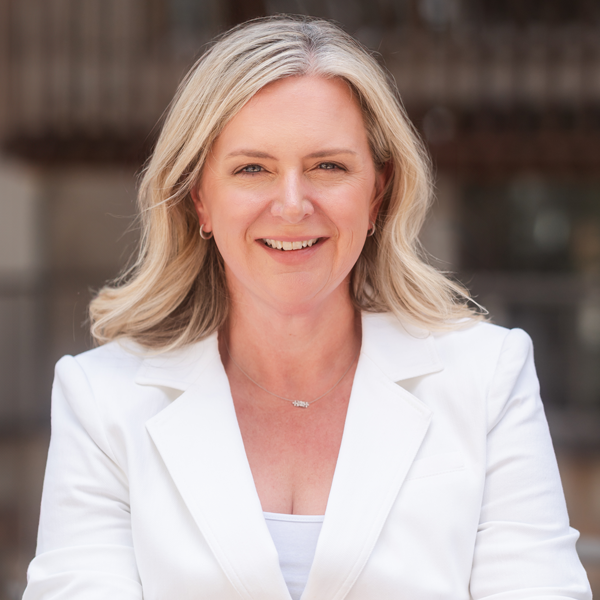
Eva Sheie is a startup veteran, content strategist, podcast producer, and professional musician. She is the founder of The Axis, a podcast production agency devoted to meeting the needs of women confronting life-changing medical decisions.
Previously as the Director of Practice Development at RealSelf, she built and scaled the RealSelf University customer education program, and hosted the RealSelf University Podcast. Today she is the host of Meet the Doctor, co-host of Less of You, and the executive producer of numerous titles on behalf of clients, including Practiceland.
VP of Practice Growth at Studio III Marketing
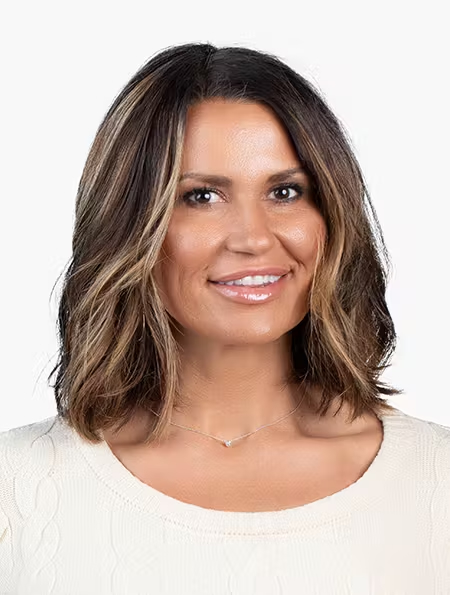
Andrea Watkins is the Vice President of Practice Growth at Studio 3, where she coaches plastic surgery and aesthetics teams on strengthening patient acquisition workflows and optimizing lead management systems to drive measurable growth. She has partnered with more than 100 practices nationwide—helping them capture and analyze lead and conversion data, streamline consultations and booking, and align staff training with business objectives.
Andrea’s approach centers on turning data into action: equipping practices to improve patient intake, increase conversion rates, maximize marketing resources, and optimize the patient journey. Known for her directive yet approachable, non-salesy style, she empowers practice leaders and teams to enhance efficiency, boost profitability, and deliver an elevated patient experience in today’s competitive market.
Chief Strategy Officer at Studio III Marketing
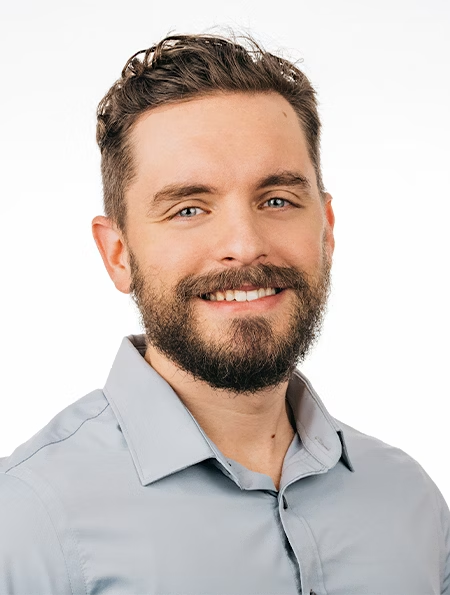
Ken Bosan is the Chief Strategy Officer at Studio 3 Marketing, where he helps aesthetic practices grow using data-driven SEO and AI strategy. He works directly with Google, trains teams nationwide, and speaks at major conferences on AI, search, and digital branding.